main menu

revelus dermatology

4401 West Gate Blvd, Ste 120
Austin, TX, 78745
Phone: (512) 815-2559

search revelus

hair loss

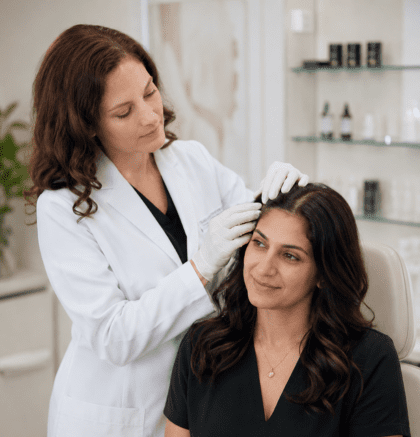
Dermatology provider examining patient scalp during hair loss evaluation in Austin
Close-up of thinning hair on scalp due to hair loss
Male pattern hair loss with receding hairline and thinning at front of scalp
Thinning hairline and hair loss along the edges from traction alopecia
Close-up of thinning hair on scalp due to hair loss
Female pattern hair loss with widened part and visible scalp from thinning hair

hair loss images

Diagnosis required by a licensed medical professional

Hair loss is a treatable condition our Austin hair and scalp dermatologists evaluate, diagnose, and manage. Whether you're noticing thinning at the part line, a receding hairline, patches of bald spots, or sudden shedding, the right starting point is identifying why it's happening. Hair loss can be temporary or permanent, and the treatment that works depends entirely on the underlying cause.

Pinpointing the cause is what makes treatment effective. Our providers perform a scalp evaluation, review your medical history, and may use trichoscopy or order targeted bloodwork to identify whether the cause is genetic, hormonal, autoimmune, medication-related, or tied to another health change. At Revelus Dermatology, we treat hair loss as a medical condition that deserves the same careful diagnos... More

Pinpointing the cause is what makes treatment effective. Our providers perform a scalp evaluation, review your medical history, and may use trichoscopy or order targeted bloodwork to identify whether the cause is genetic, hormonal, autoimmune, medication-related, or tied to another health change.

At Revelus Dermatology, we treat hair loss as a medical condition that deserves the same careful diagnosis as any other concern. A Hair Loss Evaluation with one of our providers is the first step toward a treatment plan built around your specific cause, hair type, and goals.

Woman checking widened hair part in mirror for signs of thinning hair and hair loss

signs + symptoms of hair loss

Hair loss can show up gradually or suddenly, and the way it presents often points to the underlying cause. The signs below are the most common patterns patients notice. If any of these match what you’re experiencing, it’s worth scheduling an evaluation with one of our hair and scalp dermatologists.

key characteristics:

  • What it looks like: Thinning at the part line or crown, a receding hairline, round patches of bald skin, or noticeably more shedding than usual.
  • Where it shows up: Most commonly on the scalp, though some conditions affect the eyebrows, beard area, or body. The pattern often points to the cause.
  • What you might feel: Most forms of hair loss don’t cause physical discomfort. Scalp itching, burning, tenderness, or redness alongside hair loss can be a sign of a scarring alopecia and warrants prompt evaluation.
  • How it progresses: Hair loss can develop slowly over years or appear suddenly within weeks. Some types are temporary and reverse on their own or with treatment. Others, particularly scarring conditions, can cause permanent loss if not addressed early.

Sudden, widespread shedding or rapid patchy hair loss should be evaluated promptly. Early diagnosis is the strongest predictor of effective treatment.

types of hair loss we treat

androgenetic alopecia (male and female pattern hair loss)

The most common form of hair loss, often inherited, and gradual in onset. In women, it usually shows up as widening at the part line or overall thinning across the crown. In men, it typically starts at the temples or crown and follows a recognizable pattern over years. Treatment options include topical minoxidil, oral medications, PRP, and compound prescriptions tailored to your situation.

telogen effluvium (stress, illness, or postpartum shedding)

A temporary form of widespread shedding triggered by a physical or emotional stressor, illness, surgery, rapid weight loss, thyroid changes, certain medications, or childbirth. The shedding usually appears two to three months after the triggering event and is most often reversible once the underlying cause is identified and addressed.

alopecia areata (autoimmune patchy hair loss)

An autoimmune condition where the body’s immune system mistakenly attacks hair follicles, causing round, smooth patches of hair loss on the scalp or body. It can develop suddenly and may resolve on its own, recur, or progress. Treatment options include intralesional steroid injections, topical therapies, and newer oral medications for more extensive cases.

scarring alopecias (lichen planopilaris, frontal fibrosing alopecia, ccca)

A group of conditions where inflammation damages the hair follicle permanently. Early symptoms can include itching, burning, tenderness, or redness on the scalp, and hair loss in these conditions is often permanent if untreated. Early diagnosis and treatment are important to slow progression and preserve as much hair as possible.

traction alopecia (tension-related hair loss)

Hair loss caused by repeated tension on the hair, often from tight hairstyles, extensions, or certain styling practices over time. Early intervention can prevent permanent damage to the follicles. Treatment focuses on relieving the tension and addressing any inflammation that has developed.

postpartum and hormonal hair loss

Shedding that follows childbirth, breastfeeding, menopause, or other significant hormonal shifts. Postpartum shedding is a form of telogen effluvium and usually resolves on its own, though some patients benefit from medical support during the process. Hormonal hair loss in perimenopause and menopause may respond to a combination of topical, oral, and in-office treatments.

your skin, our priority

Your skin deserves careful evaluation and clear guidance. If you notice changes in your skin or have ongoing concerns, our team is here to help you understand your diagnosis and feel confident in your care.

Dermatology provider discussing hair loss evaluation and treatment options with patient in Austin

what to expect at a hair loss evaluation

A Hair Loss Evaluation is the diagnostic appointment that turns guesswork into a plan. Most patients come in unsure whether their hair loss is genetic, stress-related, hormonal, or something else, and they leave with a clear understanding of the cause and the treatments that fit their situation.

  • A focused scalp examination, often using trichoscopy to closely evaluate the hair follicles and scalp.
  • A review of your medical history, current medications, recent life changes, and family history of hair loss.
  • Targeted bloodwork or a scalp biopsy if clinically indicated to confirm the cause.
  • A discussion of your treatment options, which may include topicals, oral medications, compound prescriptions, PRP, or in-office treatments.
  • A personalized treatment plan and timeline, with follow-up appointments scheduled to monitor your progress.

The Hair Loss Evaluation is the recommended starting point for any patient experiencing thinning, shedding, or visible hair loss.


common hair loss questions

FAQ
is hair loss treatment covered by insurance?

The medical evaluation of hair loss is often covered by insurance because hair loss is a medical condition with diagnostic value. Coverage of specific treatments varies. Prescription topicals and oral medications are typically partially covered, while in-office treatments like PRP are considered cosmetic and paid out of pocket. Our team can walk through the cost of any recommended treatments before you decide how to move forward.

when should i see a dermatologist for hair loss?

A good rule of thumb is to schedule an evaluation if you’ve been shedding more than usual for several weeks, you’re noticing visible thinning at the part line or temples, you’ve developed patches of bald skin, or you have any scalp symptoms like itching, burning, or tenderness. Early diagnosis is the strongest predictor of effective treatment, especially for scarring conditions where the window for preserving hair is time-sensitive.

what is a hair and scalp dermatologist?

A hair and scalp dermatologist is a board-certified dermatologist with focused experience in diagnosing and treating conditions that cause hair loss, scalp inflammation, and related concerns. At Revelus Dermatology, our providers evaluate the scalp with techniques like trichoscopy, identify the underlying cause of hair loss, and build treatment plans based on the specific condition. This is different from a general hair care professional, a stylist, or a salon-based provider.

what treatments do you offer for hair loss in austin?

We offer topical prescriptions, oral medications, compound prescriptions tailored to your specific case, injectable treatments for conditions like alopecia areata, and PRP for hair restoration. Most patients respond best to a combination of treatments adjusted over time based on how they respond. The right combination depends on the type and cause of your hair loss, which is identified during your initial Hair Loss Evaluation.

how long does it take to see results from hair loss treatment?

Most hair loss treatments need three to six months of consistent use before results become visible, and meaningful regrowth often takes nine to twelve months. This isn’t a sign that treatment isn’t working, it’s the natural timeline of how hair grows. Your provider will set realistic expectations at your evaluation and schedule follow-ups to monitor progress and adjust treatment as needed.

how do i know if my hair loss is permanent?

It depends on the type of hair loss. Non-scarring conditions like androgenetic alopecia, telogen effluvium, and alopecia areata don’t permanently damage the hair follicle, so regrowth is possible with the right treatment. Scarring alopecias, including lichen planopilaris and frontal fibrosing alopecia, can permanently damage the follicle if not caught early. A scalp evaluation, and when needed a biopsy, can confirm which type you’re dealing with.

how is hair loss treatment different for men and women?

The underlying causes of hair loss in men and women often differ, and the treatment plan reflects that. Female pattern hair loss tends to involve diffuse thinning across the crown and may be tied to hormonal changes, postpartum recovery, or menopause. Male pattern hair loss typically follows a recognizable receding or crown-thinning pattern and is often genetic. Both respond well to treatment when the cause is correctly identified.

does prp work for hair thinning?

PRP can be effective for certain types of hair loss, particularly androgenetic alopecia caught in the earlier stages, but it isn’t right for every patient. Treatment typically involves a series of sessions, and results build over several months. It works best when combined with other medical treatments and when the cause of hair loss has been correctly identified first. Your provider will let you know if PRP is a good fit for your specific situation.

the revelus commitment

Revelus Dermatology logo representing the practice’s brand identity
safety

Your health is our priority. We treat each condition with precision and adhere to the highest safety standards in every aspect of your care.

focus

We’re dedicated to you. We listen to your concerns and develop personalized treatment plans to address your skin condition with effective, patient-centered care.

experience

With extensive expertise, our team delivers comprehensive treatments designed to restore and maintain your skin’s health, ensuring the best possible outcomes.