
main menu

revelus dermatology

4401 West Gate Blvd, Ste 120
Austin, TX, 78745
Phone: (512) 815-2559

search revelus

basal cell carcinoma
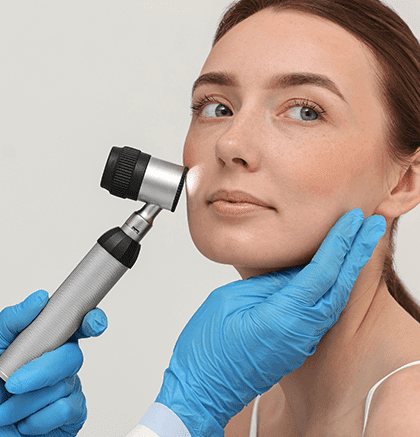
Dermatologist examining patient’s skin lesion for basal cell carcinoma
Close-up of basal cell carcinoma lesion on facial skin

basal cell carcinoma images

Diagnosis required by a licensed medical professional

Basal cell carcinoma (BCC) is the most common type of skin cancer, with millions of cases diagnosed each year in the United States. This slow-growing cancer develops in the basal cells of the epidermis and most often appears on sun-exposed areas like the face, ears, neck, scalp, and shoulders. While basal cell carcinoma rarely spreads to other parts of the body, it can grow deep into surrounding tissue and cause significant damage if left untreated.

At Revelus Dermatology in South Austin, our team includes board-certified dermatologists and a fellowship-trained Mohs surgeon who specialize in diagnosing and treating basal cell carcinoma. Living in Central Texas means year-round sun exposure, and we see skin cancer frequently among Austin residents. When caught early, basal cell carcinoma has an excellent cure rate with appropriate treatment. If you... More

At Revelus Dermatology in South Austin, our team includes board-certified dermatologists and a fellowship-trained Mohs surgeon who specialize in diagnosing and treating basal cell carcinoma. Living in Central Texas means year-round sun exposure, and we see skin cancer frequently among Austin residents. When caught early, basal cell carcinoma has an excellent cure rate with appropriate treatment. If you have noticed a new or changing spot on your skin, call (512) 815-2559 to schedule a skin cancer evaluation.

Dermatologist examining patient’s skin lesion for basal cell carcinoma

signs + symptoms of basal cell carcinoma

Basal cell carcinoma often develops slowly and may not cause pain, which is why regular skin checks are important. Our South Austin dermatologists can identify suspicious spots during a skin cancer screening and perform a biopsy if needed.

common characteristics:

  • Appearance: BCC can look different depending on the subtype. Common presentations include a pearly or waxy bump, a flat flesh-colored or brown scar-like lesion, a pink growth with a raised border and crusted center, or a sore that repeatedly heals and reopens. Some BCCs have visible blood vessels on the surface.
  • Location: Most commonly appears on areas with chronic sun exposure including the face (especially nose, eyelids, and ears), neck, scalp, shoulders, and back. Can also develop on areas with less sun exposure in some patients.
  • Texture: May feel smooth, waxy, or slightly firm. Some BCCs develop a rolled or raised border with a depressed center. Crusting, scaling, or bleeding may occur.
  • Behavior: Grows slowly over months to years. May bleed with minor injury, form a scab, heal partially, then reopen. Does not go away on its own and gradually increases in size.
  • Warning signs: Any new growth that bleeds easily, does not heal within a few weeks, or changes in size, shape, or color should be evaluated promptly.

your skin, our priority

Remember, timely evaluation and diagnosis can make a difference. If you notice any changes in your skin, reach out to our team. Your skin’s health is our priority.

common basal cell carcinoma questions

FAQ
what is basal cell carcinoma?

Basal cell carcinoma is the most common type of skin cancer, developing from the basal cells in the lower layer of the epidermis. It typically appears as a pearly bump, pink patch, or scar-like area on sun-exposed skin. While BCC grows slowly and rarely spreads to distant organs, it can cause significant local damage if not treated and requires professional removal.

what does basal cell carcinoma look like?

Basal cell carcinoma appears in several forms: a pearly or waxy bump often with visible blood vessels, a flat scar-like patch that is flesh-colored or brown, a pink or red growth with a raised border, or a sore that bleeds, crusts, and never fully heals. The appearance varies by subtype, which is why any new or changing skin growth should be evaluated by a dermatologist.

is basal cell carcinoma serious?

Basal cell carcinoma is considered the least dangerous form of skin cancer because it very rarely spreads to lymph nodes or distant organs. However, it should not be ignored. Left untreated, BCC can grow deep into tissue, invade nerves and bone, and cause significant disfigurement, especially on the face. Early treatment offers excellent cure rates and better cosmetic outcomes.

what causes basal cell carcinoma?

Cumulative sun exposure is the primary cause of basal cell carcinoma. Ultraviolet radiation from the sun and tanning beds damages DNA in skin cells, leading to abnormal growth. Risk factors include fair skin, history of sunburns, outdoor occupation or hobbies, living in sunny climates like Central Texas, previous skin cancer, and a weakened immune system.

how is basal cell carcinoma diagnosed?

Diagnosis requires a skin biopsy. Your dermatologist will numb the suspicious area and remove a small sample of tissue for microscopic examination by a pathologist. The biopsy confirms whether the growth is basal cell carcinoma and identifies the specific subtype, which helps determine the most appropriate treatment approach.

what is mohs surgery?

Mohs micrographic surgery is a specialized technique for removing skin cancer layer by layer while examining each layer under a microscope during the procedure. This allows the surgeon to confirm complete removal while preserving maximum healthy tissue. Mohs offers the highest cure rate (up to 99%) and is ideal for BCCs on the face, ears, nose, and other areas where tissue preservation matters.

do i need mohs surgery for basal cell carcinoma?

Mohs surgery is recommended for BCCs in cosmetically or functionally sensitive areas such as the face, ears, eyelids, nose, lips, and hands. It is also preferred for large tumors, aggressive subtypes, recurrent cancers, and BCCs with poorly defined borders. Your dermatologist will recommend the best treatment approach based on your specific situation.

how long does it take to recover from bcc removal?

Recovery depends on the treatment method and location. Most patients return to normal activities within a few days to two weeks. Mohs surgery and excisions leave a wound that heals over 2 to 4 weeks, with final scar maturation taking several months. Your care team will provide specific wound care instructions and schedule follow-up visits.

will basal cell carcinoma come back?

With appropriate treatment, basal cell carcinoma has excellent cure rates. However, having one BCC increases your risk of developing additional skin cancers in the future. About 40% of patients who have had BCC will develop another one within five years. Regular skin checks and sun protection are essential for ongoing monitoring and prevention.

how can i prevent basal cell carcinoma?

Reduce your risk by protecting your skin from UV radiation: use broad-spectrum SPF 30+ sunscreen daily, wear protective clothing and wide-brimmed hats, seek shade during peak sun hours (10am to 4pm), avoid tanning beds, and perform monthly skin self-exams. If you have had BCC previously, schedule regular skin cancer screenings with a dermatologist.

how often should i get skin cancer screenings?

After a basal cell carcinoma diagnosis, most dermatologists recommend skin exams every 6 to 12 months for the first few years, then annually if no new cancers develop. People with multiple skin cancers, extensive sun damage, or other risk factors may need more frequent monitoring. Our South Austin office provides comprehensive skin cancer surveillance.

is basal cell carcinoma common in austin?

Yes, skin cancer including basal cell carcinoma is common in Central Texas due to the sunny climate and high UV index for much of the year. Austin’s outdoor lifestyle increases cumulative sun exposure. Our dermatologists see basal cell carcinoma regularly and provide complete care from diagnosis through treatment and ongoing monitoring.

what is the difference between basal cell and squamous cell carcinoma?

Both are common skin cancers caused by UV exposure, but they develop from different cells. Basal cell carcinoma arises from cells in the lower epidermis and tends to grow slowly with very low metastatic potential. Squamous cell carcinoma develops from cells in the upper epidermis, can grow faster, and has a higher (though still low) risk of spreading. Both require professional treatment.

does insurance cover basal cell carcinoma treatment?

Yes, basal cell carcinoma treatment including Mohs surgery is medically necessary and typically covered by health insurance plans. Coverage varies by plan, and deductibles or copays may apply. Our office can verify your benefits and provide cost estimates before treatment. Contact us at (512) 815-2559 for insurance questions.

the revelus difference

Revelus Dermatology logo representing the practice’s brand identity
safety

Your health is our priority. We treat each condition with precision and adhere to the highest safety standards in every aspect of your care.

focus

We’re dedicated to you. We listen to your concerns and develop personalized treatment plans to address your skin condition with effective, patient-centered care.

experience

With extensive expertise, our team delivers comprehensive treatments designed to restore and maintain your skin’s health, ensuring the best possible outcomes.